Campaign Team Kickoff Retreat
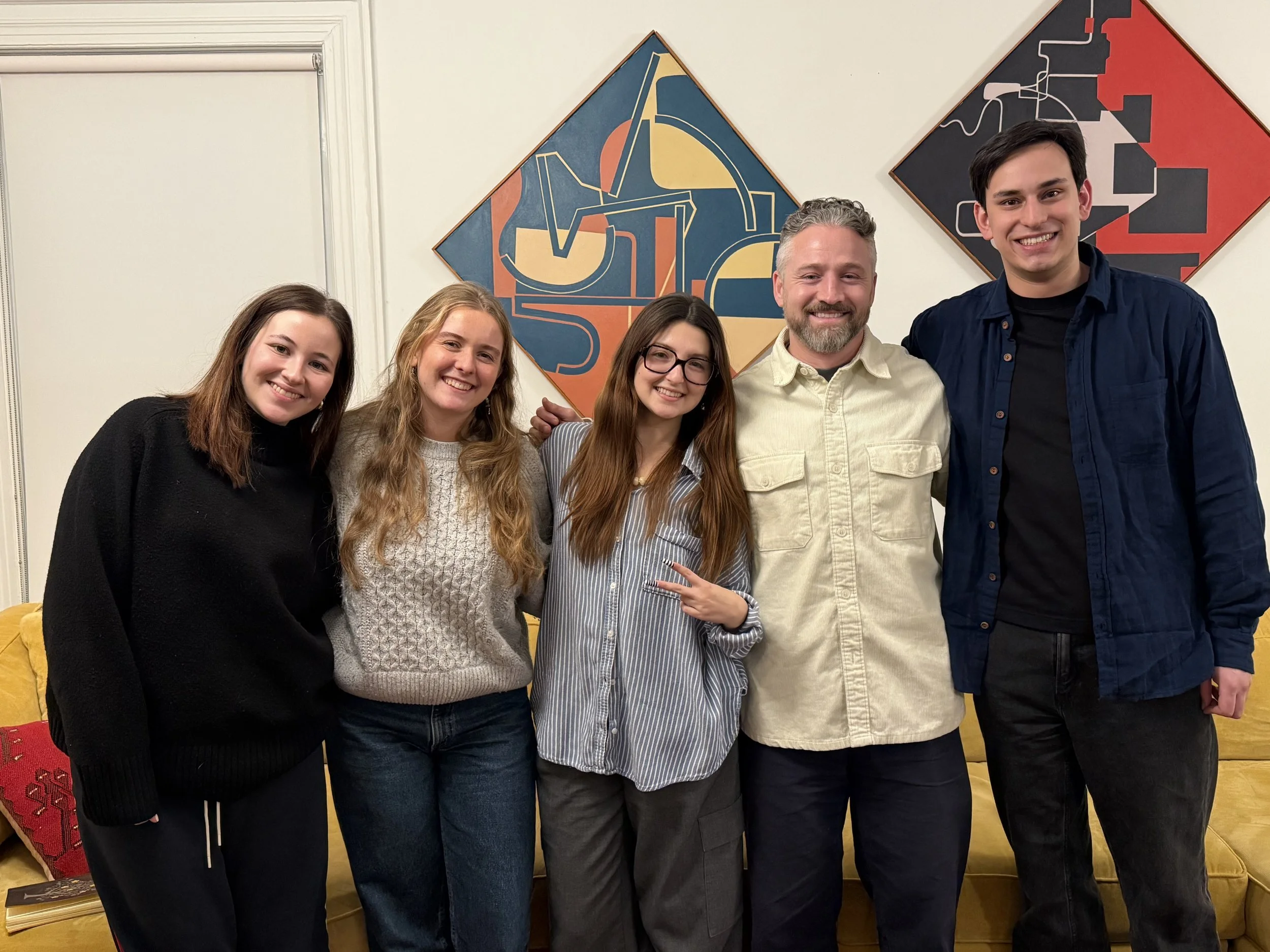
Momentum matters early in a campaign, but alignment matters more.
As Eli Northrup’s New York State Assembly campaign moved from vision into execution, the core campaign team came together at a pivotal moment. Roles were forming, strategy was coming into focus, and the pace was accelerating. What hadn’t yet been fully built was the shared operating system the team would need to build and sustain trust, clarity, and coordinated action through a demanding election cycle.
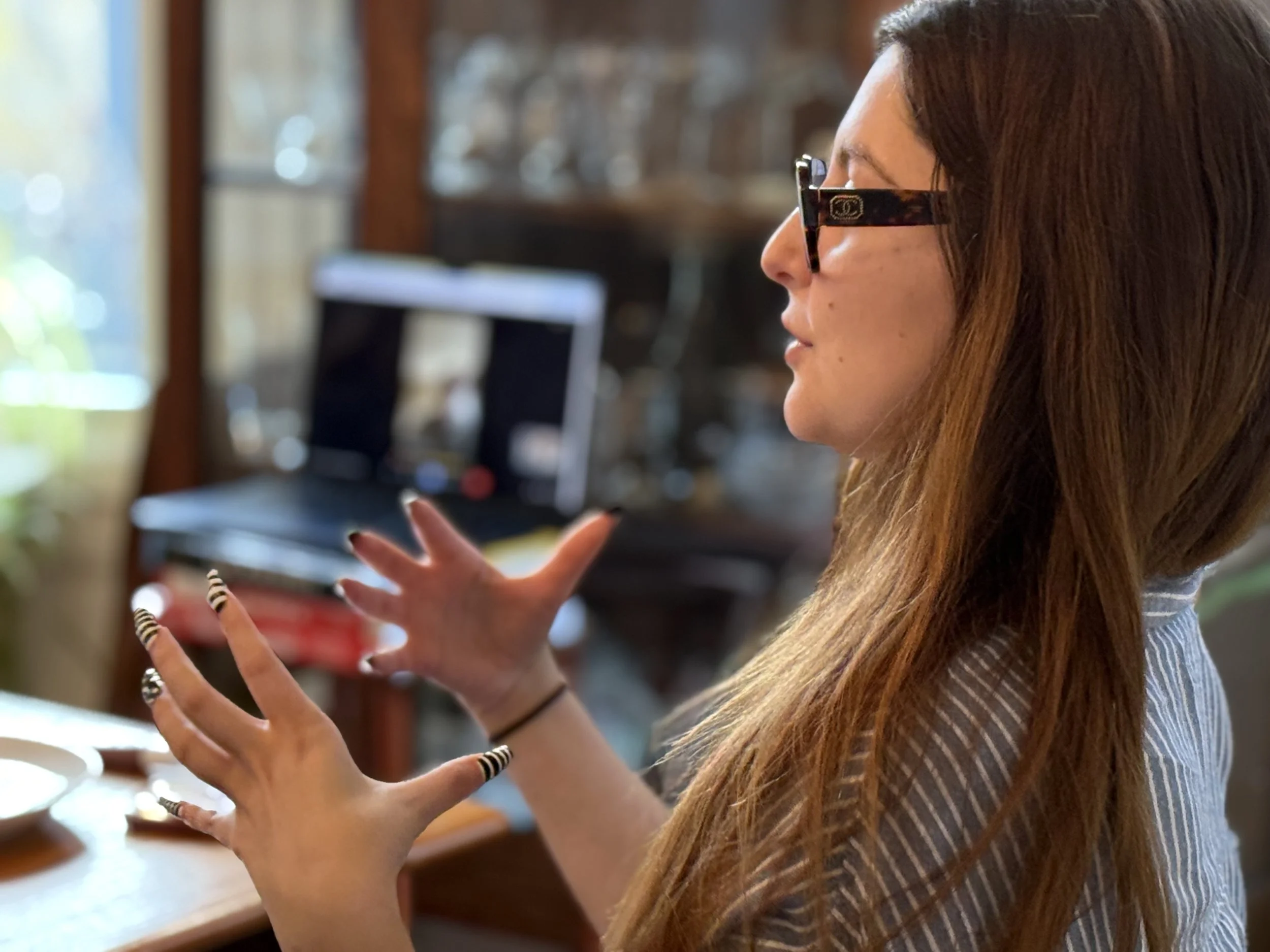
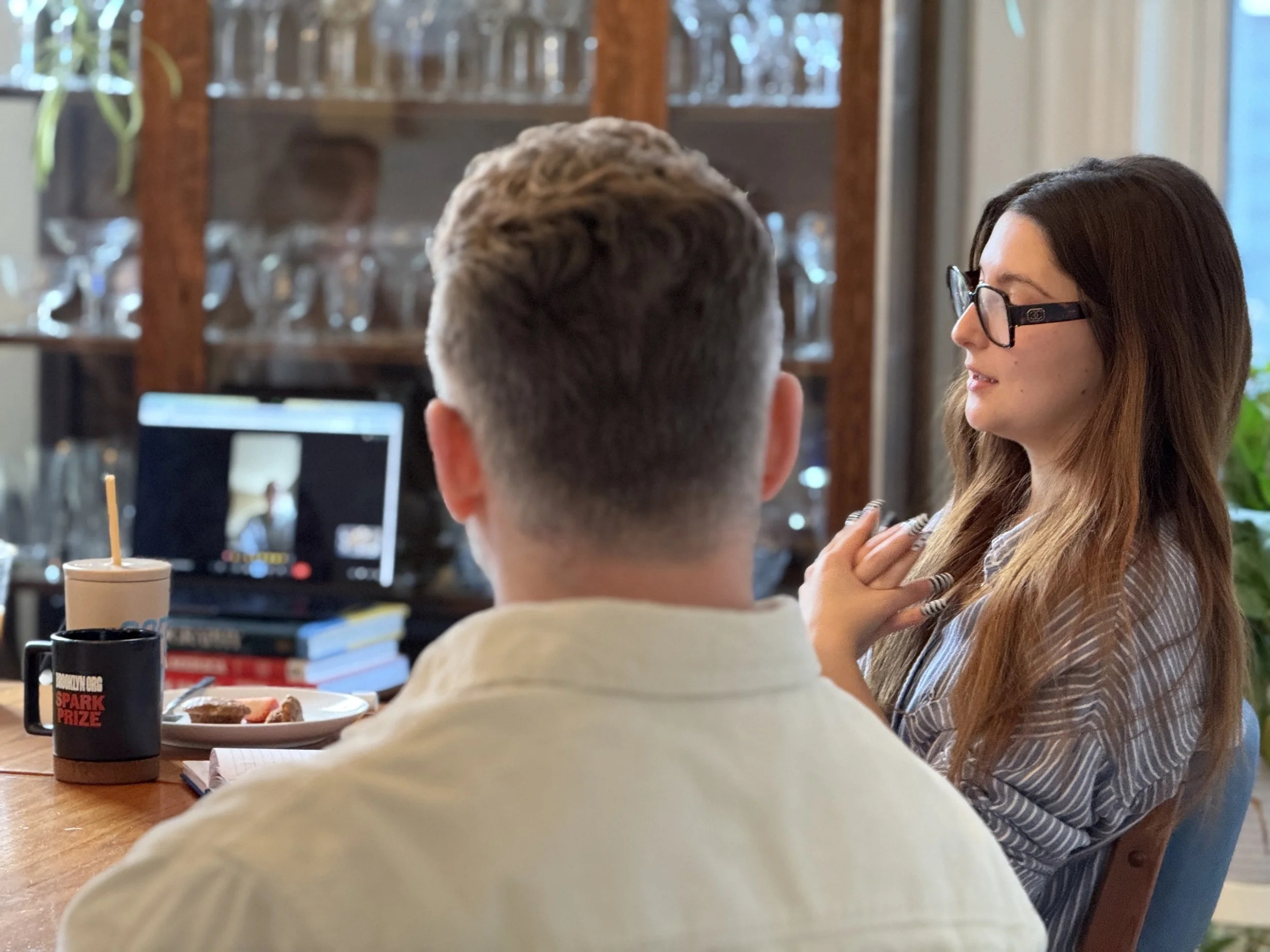
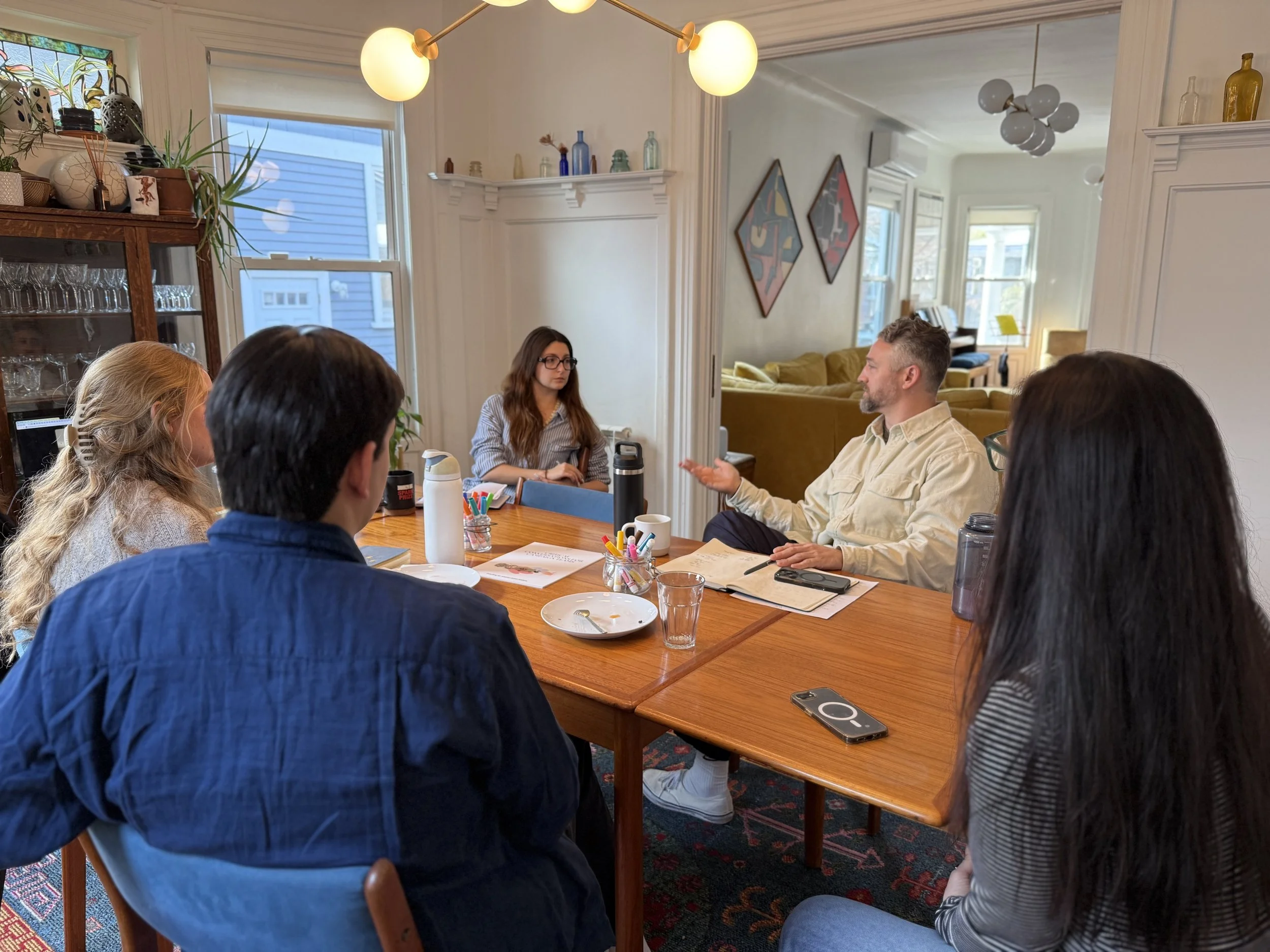
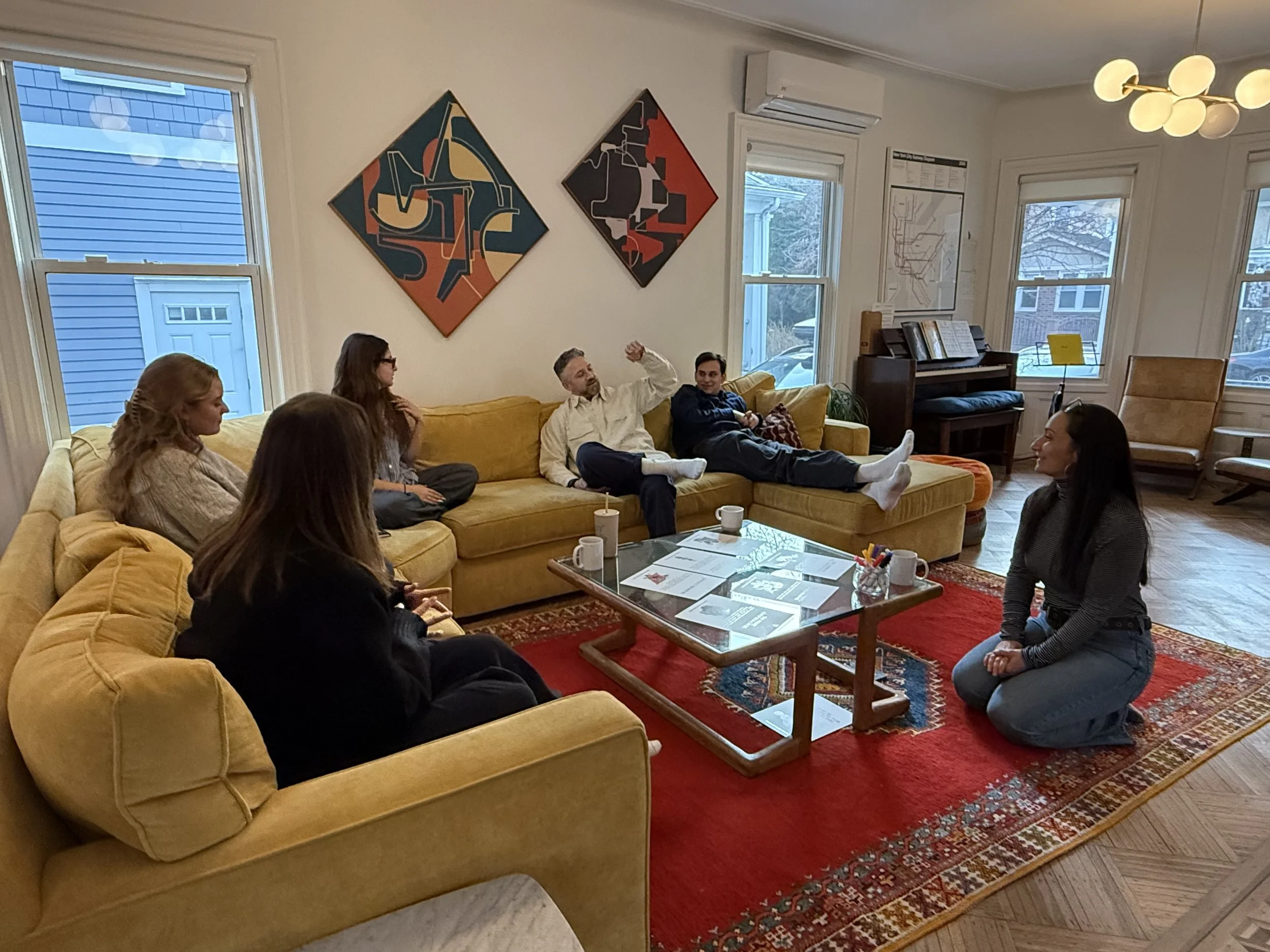
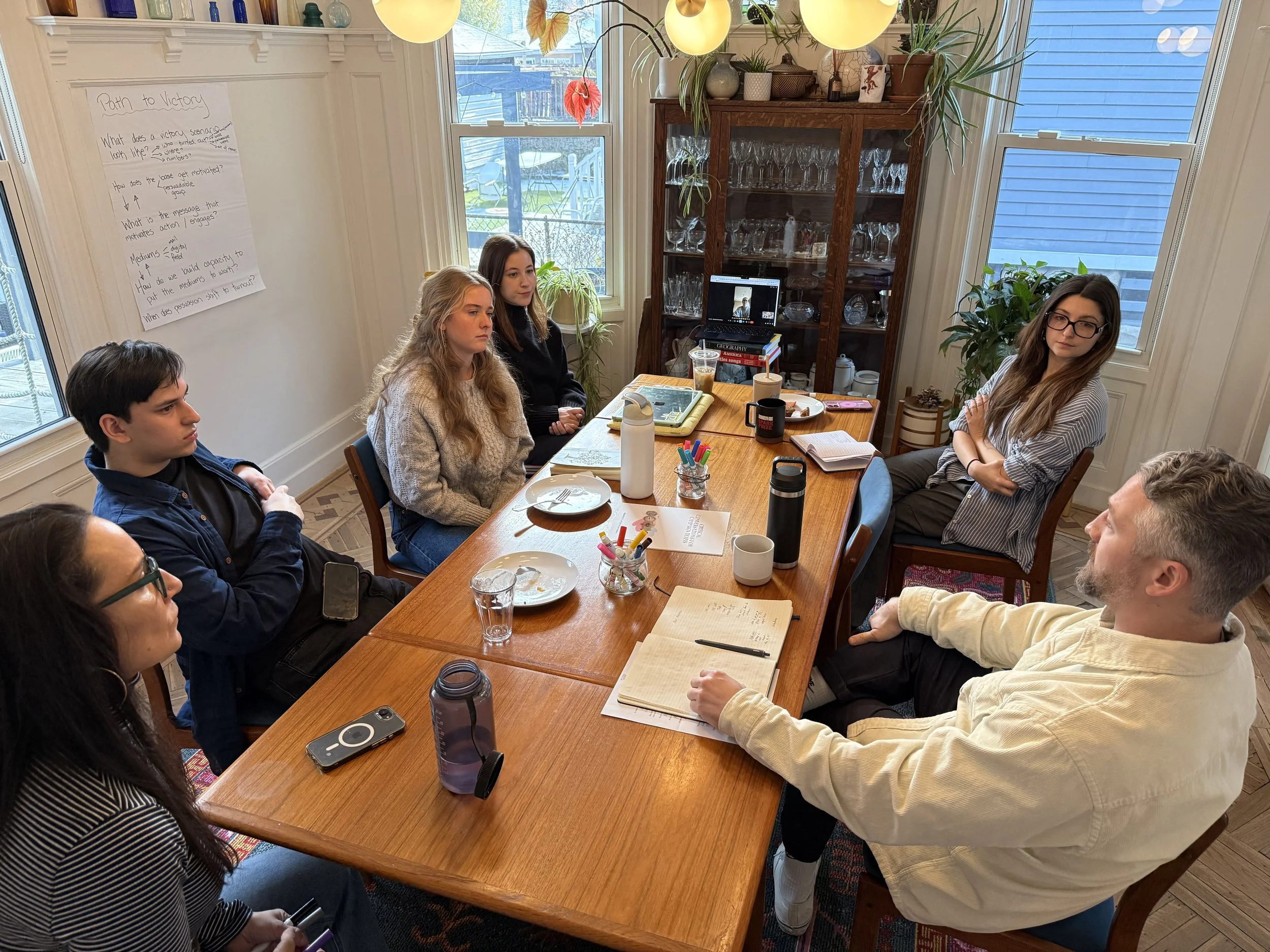
We designed and facilitated a one-day kickoff retreat to help the campaign team slow down just enough to get aligned so they can move faster, together.
The Challenge
Campaign teams face a seemingly never-ending cascade of challenges and tensions, often including urgency without alignment. Eli’s team was committed and deeply invested in winning - but like many early-stage campaigns, they were navigating:
An emerging (but not yet fully codified) path to victory
Overlapping roles and informal power that hadn’t been named
The need to build trust and rapport quickly, while already “in motion”
Without intentional space to clarify roles, decision-making, and team norms, even strong teams can lose energy to confusion, duplication, or unspoken friction.
Our Approach
We designed and facilitated a one-day Campaign Team Kickoff Retreat focused on clarity, coordination, and care.
Our day began with the personal. In the candidate’s words: “I felt like a really valuable part (of the morning) was getting to know each team member more personally, their identified strengths and weaknesses. I think this set the stage for the broader, more honest conversation (that followed).” After spending time getting to know each other, we set out to help the team do three essential things:
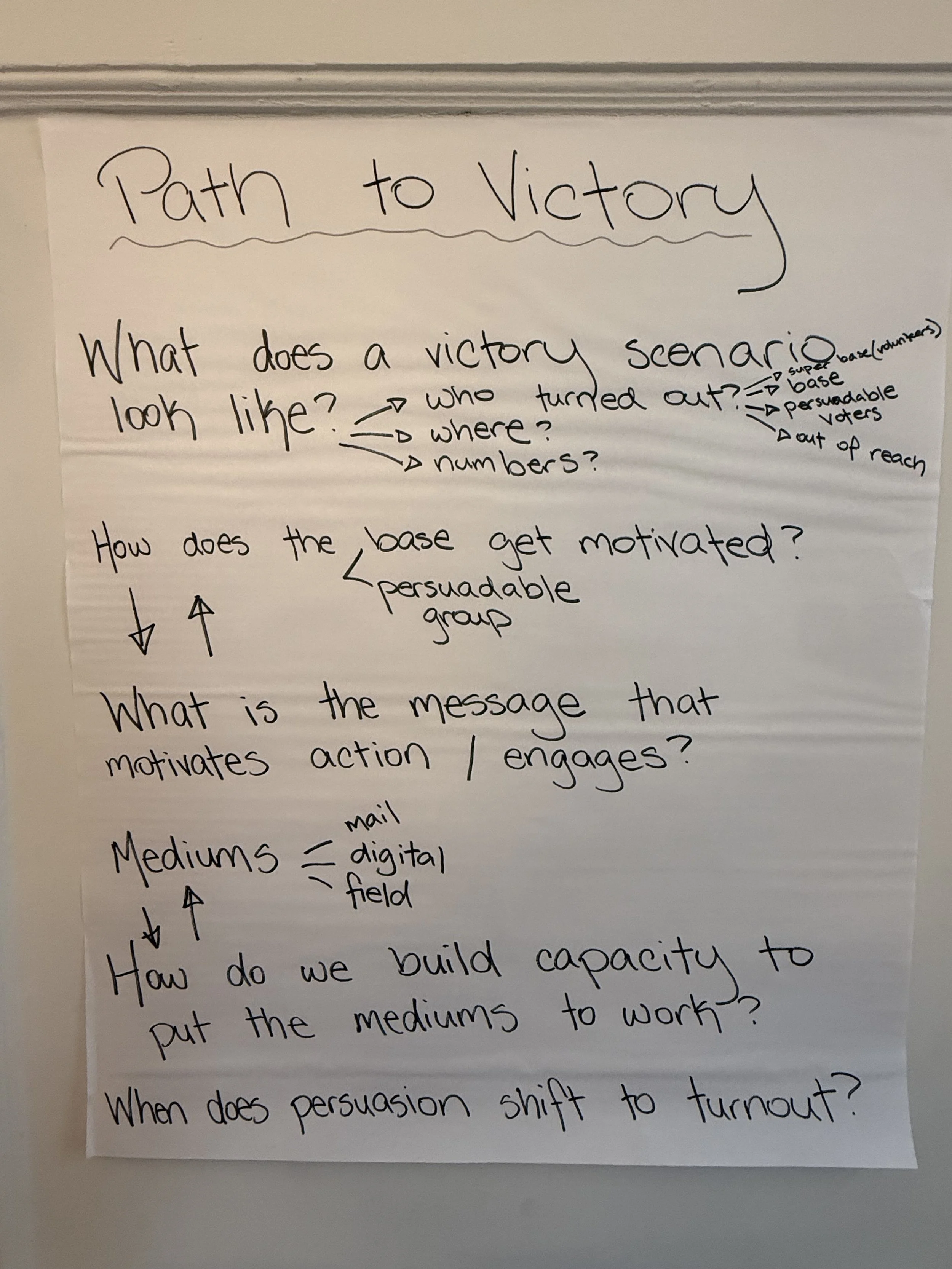
Goal #1: Anchor to the Path to Victory
We guided the team through a strategic conversation, connecting goals, strategies, audiences, messages, tactics, and timing, so everyone could see how their role contributed to winning.
Rather than finalizing every detail, the work focused on building a collective orientation to success.
Goal #2: Make Roles Clear and Power Visible
Through role mapping and real campaign scenarios (events, volunteer engagement, communications moments), the team clarified:
Where responsibility begins and ends
How roles intersect under pressure
How to effectively leverage the candidate’s informal group of key supporters and advisors, lovingly referred to as the “Kitchen Cabinet”
This surfaced the need for direct conversation about formal and informal power and influence, articulated strategies to reduce ambiguity, and set the conditions for coordinated decision-making.
Goal #3: Establish Habits That Support Performance and Sustainability
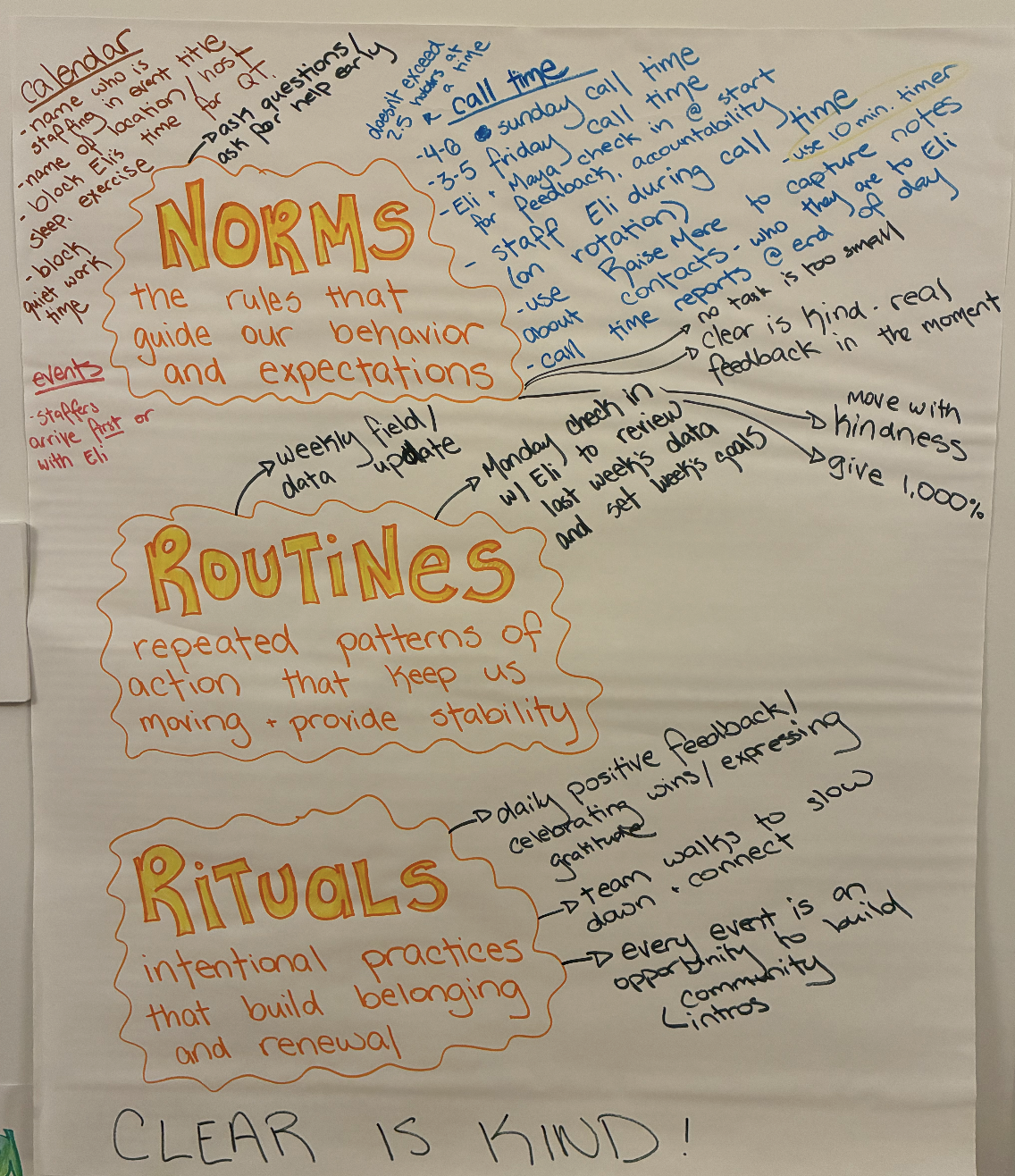
Together, the team co-created norms, routines, and rituals that would guide how they work day-to-day. These explicitly discussed working habits included clear communication and feedback expectations, weekly rhythms for data review and goal-setting, and rituals that attend to morale, connection, and meaning. The emphasis wasn’t just on efficiency, it was on building a campaign culture that could endure.
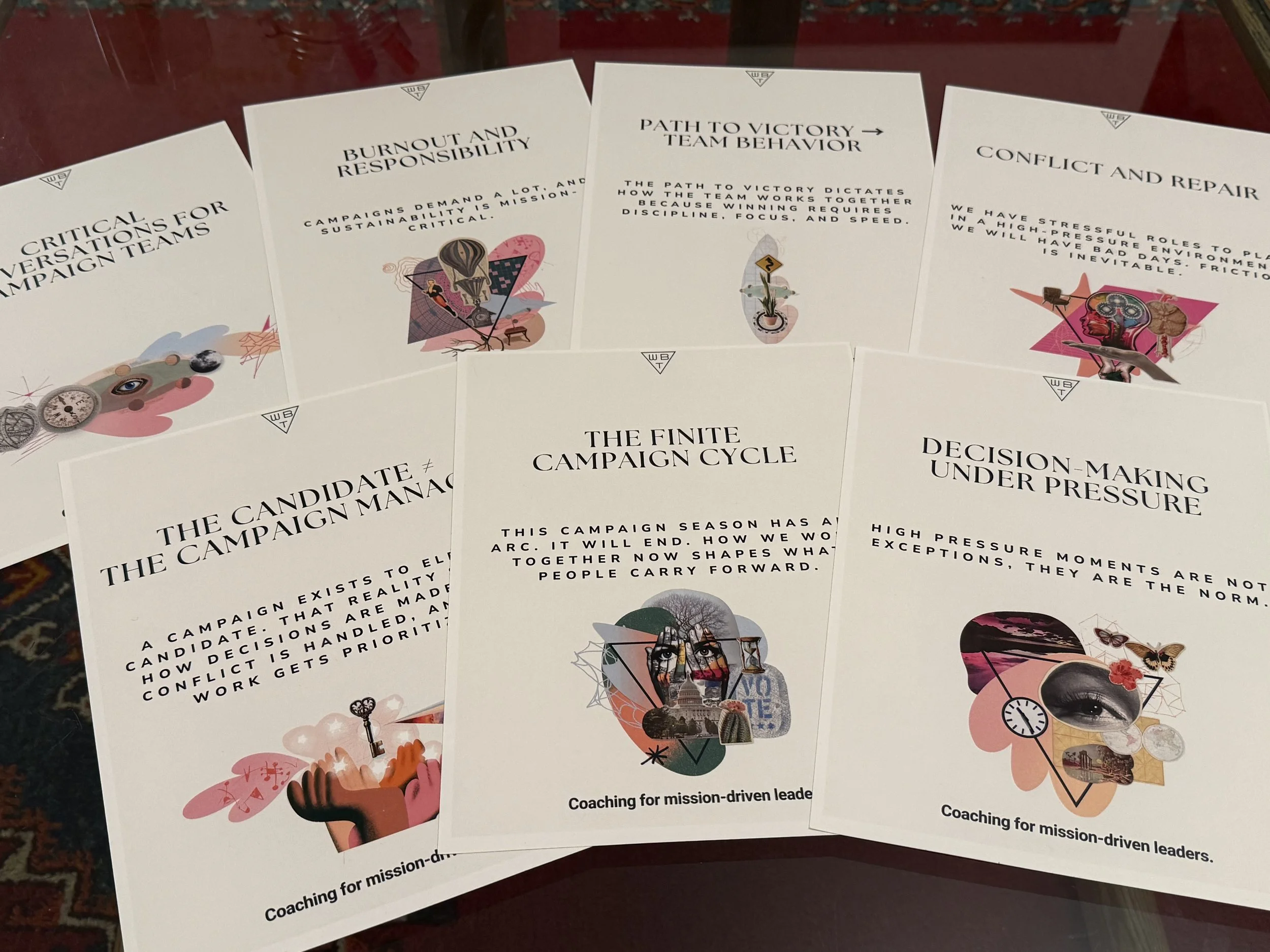
Throughout the day, we focused on translating strategy into lived practice: How do we actually work together when it’s busy, stressful, and high-stakes?
Outcomes & Impact
By the end of the retreat, the campaign team had developed the outline for a shared understanding of the path to victory, clearer role definitions and interdependencies, explicit norms and routines to support accountability and care, and a sense of momentum grounded in alignment, not urgency alone.
Perhaps most importantly, though, the team left with a shared language for how they want to show up for the campaign and for one another.
What shifted was the team’s collective mindset. Strategy became a shared point of orientation, creating conditions for the team to work with more confidence and coherence. They named and thought through power dynamics and decision-making structures. The team committed to give and receive real-time feedback, ask for help early, and communicate through ambiguity. They began to see their leadership not as a title or function, but as a set of daily practices for decision-making, responsibility-taking, and caring for each other on their path to winning.
Testimonials
“What’s really valuable about you all is there's both the deep experience coaching and providing insight, almost like a work therapist with the leadership coaching, combined with the campaign strategy and the focus on what it takes to run a strong campaign that's built to win… What you provide is so important and effective because it draws from both of those disciplines… you’re all about building a team that's built to win.
The (retreat) day allowed us all to express both anxieties and strengths, and I think we understand each other better coming out of it. People had things that they'd been holding on to and, during the retreat, they felt like there was space to let go and put those things out in the open, which has created a culture where I think we can do that as a norm moving forward. We defined roles, we connected and we have language to use moving forward to make sure we’re working well together. It was such an important step to building our team’s foundation.”
- Eli Northrup, Candidate for New York State Assembly
“We've used MOCHA (from The Management Center) more than 5 times, including yesterday. Someone tried to take something off my plate, but I paused, referred to the visual of our roles that we developed in the retreat, and said, “that’s mine to manage.” We all know that we have really clear roles and we're all committed to sticking to them. Call time was a big topic of conversation (during the retreat) and it's been night and day. We are hitting our goals faster and in less time overall, Eli’s more focused, and the follow-up reports sent afterwards get us competitive and wanting to beat ourselves!
The difference this time together made is huge. Campaigns are planes already in flight when the team boards. This (day together) felt like we got to do some ground work, put the wheels on the plane, and made sure the wings were sturdy before we took off. There's a lot less tension than I typically see on campaign teams. We were all able to really ground ourselves in trust and respect for each other during that day.
Eli prioritizing this time together gave all of us a lot of security and confidence that he is prioritizing us as a team, and he sees us as whole people that he wants to invest in. He’s committed to everyone's growth and we’re all committed to the success of the campaign.”
- Courtney Curd, Campaign Manager